Disclosure: As an Amazon Associate, I earn from qualifying purchases. This post contains affiliate links, meaning I may earn a small commission if you buy through them. I only share products our family has used or genuinely believes would be helpful. Thank you for supporting NDHS Life!
Birthdays and Sensory Challenges
Birthdays are exciting in our house—not just for my daughter, but for us as parents, too. My daughter loves the idea of turning another year older and getting a little closer in age to her older friends. My husband and I celebrate another good year of parenting and homeschooling.
When you’re raising a neurodivergent child, birthdays can also bring unique challenges. Birthday parties are often full of sensory overload, making what should be a joyful celebration feel overwhelming.
For my daughter, being around a large group of children—even her closest friends—can be too much. Last year, she invited eight friends to her party. When the noise became overwhelming, she grabbed her headphones (paid link), curled up on the couch with a book, and took the break she needed. Singing “Happy Birthday” is also a sensory trigger for her, so she asked us not to sing. We were more than happy to respect that request.
This year, she decided she wanted something much smaller.
Birthdays as a Homeschool Lesson
Instead of a traditional birthday party, my daughter chose to invite just two friends over for dinner and playtime. I loved that she advocated for what would make her feel comfortable while still celebrating with people she enjoys.
Since we were keeping the celebration small, I wanted to find another meaningful way to celebrate her. That’s when I realized there was no better theme for our homeschool lessons than my daughter herself.
A birthday-themed homeschool week is a fun way to celebrate your child while naturally incorporating reading, writing, math, science, art, and social-emotional learning.
Language
One of our favorite birthday traditions is creating a yearly biography and updating our family tree.
My daughter always struggles talking about herself, so I use this as as good opportunity to practice and improve. When I recently asked what she wanted to be when she grows up, she confidently answered, “A police dog trainer or Black Panther from the Avengers,” all while striking her best superhero pose.
Writing a biography gives her an opportunity to practice organizing her thoughts, speaking about herself, and practice writing sentences. Best of all, these biographies become treasured keepsakes that let us look back and see how her interests and dreams have changed over the years.
Creating a family tree is another meaningful activity. It gives her plenty of handwriting and spelling practice as she writes family members’ names. We also explore our family’s heritage, talk about where our ancestors lived, discuss what daily life was like during their lifetimes, and learn about important historical events that occurred while they were alive. It’s a fantastic way to blend language arts with history and geography.
Art
Art is one of my daughter’s favorite subjects, so we always keep contractors paper (paid link) on hand for large art projects.
One of her birthday activities we both enjoy is creating a life-sized self-portrait. I have her lie down on the paper while I trace the outline of her body. Then she has the freedom to decorate it however she sees herself.
If you ask my daughter what her favorite color is, she’ll proudly answer “rainbow,” so her portraits are always bursting with color. It’s a simple activity that encourages creativity while celebrating her unique personality, and I love seeing the final product.
Math
There are countless ways to incorporate math into birthday learning.
We love to make my daughter a birthday countdown calendar. She uses dot markers (paid link) or her favorite stickers (paid link) to mark off each passing day.
The countdown naturally opens discussions about the days of the month and the months of the year. We use this calendar (paid link) as part of our daily homeschool routine, making it an easy addition to our lessons.
Since she’s currently learning to tell time, we also practice finding the exact time she was born using an analog clock (paid link).
She also loves working with tally marks, so we count and record everyone’s ages using tally marks for extra practice.
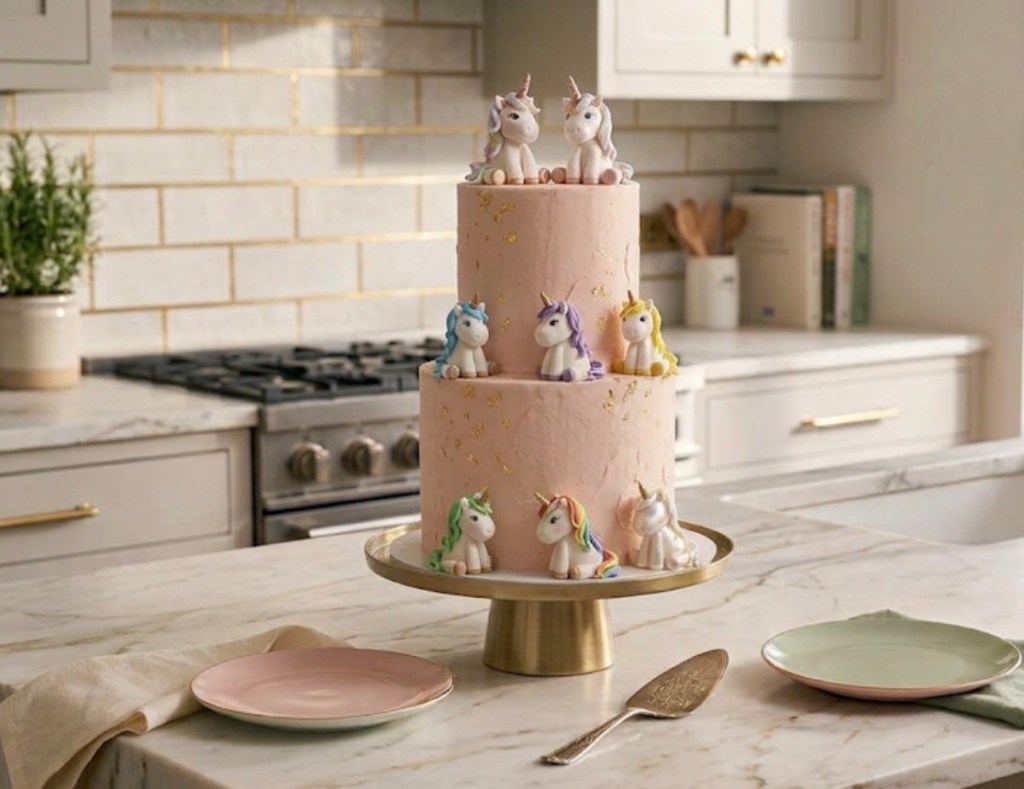
Because our family has food allergies, we bake all of our birthday cakes at home. Baking provides plenty of opportunities to practice measuring ingredients, fractions, and other math concepts in a hands-on way.
Science
Science is another subject that fits naturally into birthday learning.
Since my daughter enjoys astronomy, we talk about how each birthday marks another trip around the sun. That simple conversation often turns into further discussions about the solar system, planets, and space.
She also loves anatomy, so birthdays become a great opportunity to learn about the human body. We talk about DNA, what makes each person unique, and how different organs work together to keep us healthy. She finds it fascinating to learn more about how her own body works.
Social Emotional Learning (SEL)
Birthday week is also a perfect time to focus on social-emotional learning.
Together, we reflect on the previous year’s birthday. We talk about what she enjoyed, what felt difficult, and which sensory experiences were overwhelming. Then we brainstorm ways to make future celebrations more comfortable and enjoyable.
We revisit one of her favorite books (paid link), a story she relates to, and use it as the starting point for conversations about emotions and self-advocacy. We use this time as a quick reminder about body boundaries and personal space. We reinforce that her body belongs to her and that she gets to choose how she greets others—whether that’s a hug, high five, fist bump, or simply a wave.
Celebrating More Than Another Year
A birthday is about so much more than parties, cakes and presents. It’s a chance to celebrate your child’s growth, personality, interests, and accomplishments. We also have the opportunity to create learning experiences that will make a deep, lasting impression.
Whether your child loves a big celebration or prefers a quiet day with a few close friends, incorporating birthdays into your homeschool can turn an ordinary week of lessons into something truly personal. By building learning around what makes your child unique, you’re not only covering academic subjects-you’re creating traditions, preserving memories, and showing them that they are amazing and worth celebrating.
 Neurodivergent Homeschool Life
Leave a comment